
Cinnamon


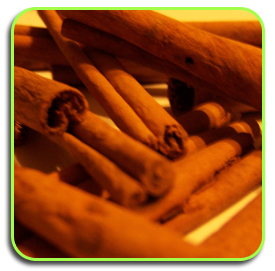 Cinnamon is a kind of spice obtained from the inner bark of several species of trees of the genus Cinnamomum that is used for sweet and savory dishes . Although cinnamon is sometimes regarded as " true cinnamon " , most of cinnamon bark in the international trade of other species nearby , which is also called " cassia " to distinguish it from the " true cinnamon " .
Cinnamon is the name for a dozen species of trees and herbs commercial product produced by some of the trees . Everything belonging to the genus Cinnamomum in the family Lauraceae . Only a few of these species are grown to be sold as a spice .
Cinnamon is cultivated by growing the tree for two years, then coppicing it, i.e., cutting the stems at ground level. The following year, about a dozen new shoots will form from the roots, replacing those that were cut.
Flavour, aroma & Taste
The flavour of cinnamon is due to an aromatic essential oil that makes up 0.5 to 1% of its composition. This essential oil is prepared by roughly pounding the bark, macerating it in sea water, and then quickly distilling the whole. It is of a golden-yellow colour, with the characteristic odour of cinnamon and a very hot aromatic taste.
Cinnamon bark is widely used as a spice. It is principally employed in cookery as a condiment and flavouring material. It is used in the preparation of chocolate,(wikipedia)
Our Product Spesification :
Patchouli
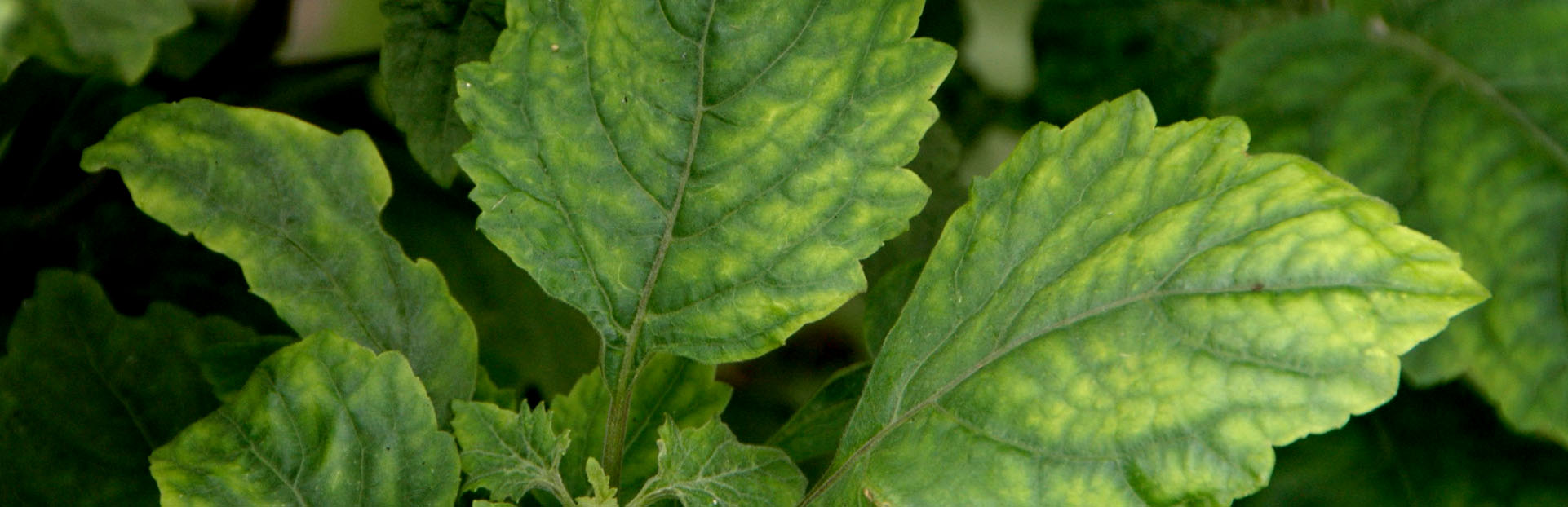 Patchouli (Pogostemon cablin (Blanco) Benth; also patchouly or pachouli) is a species of plant from the genus Pogostemon. It is a bushy herb of the mint family, with erect stems, reaching two or three feet (about 0.75 metre) in height and bearing small, pale pink-white flowers. The plant is native to tropical regions of Asia, and is Indonesia is best known as the largest patchouli producer.
The heavy and strong scent of patchouli has been used for centuries in perfumes and, more recently, in incense, insect repellents, and alternative medicines.(wikipedia)
Our Product Spesification :
Massoia Bark

 Massoia lactone is an alkyl lactone derived from the bark of the Massoia tree (Cryptocaria massoia) which is found in Papua, Indonesia though the compound can also be found as a component of cane sugar molasses, cured tobacco and the essential oil of Sweet Osmanthus (Osmanthus fragrans).
Massoia lactone has an odour that is described as sweet, coconut meat, lactonic, creamy, milky and waxy and, at a dilution of 20 ppm, a taste described as creamy, coconut, green and slightly fruity.
(wikipedia)
We harvest massoia barks from our own regrown massoia tree that planted on remotely higher ground of papua, with help from local farmer and harvester, and without endangering the area from deforestation by keeping it regrowth.
Our Product Spesification :